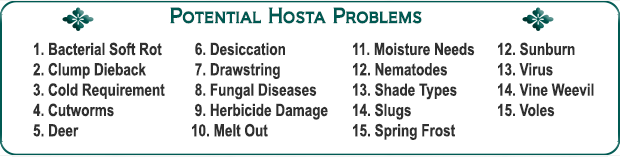
Hostas are noted for having a fairly high need
for water. This is probably true because their native lands receive
in the neighborhood of 60 inches of rain per year. That level of
precipitation is only matched in the
Pacific
Northwest in the
United States
and Scotland in the U.K. Parts of New Zealand also receive rain in
those amounts.
Hostas are noted for having a fairly high need
for water. This is probably true because their native lands receive
in the neighborhood of 60 inches of rain per year. That level of
precipitation is only matched in the
Pacific
Northwest in the
United States
and Scotland in the U.K. Parts of New Zealand also receive rain in
those amounts.
On the other hand, the Midwest and Northeastern
U.S.,
England and most of
Europe receive somewhere between 20 to 40
inches of rain annually. This points out the need for supplemental
irrigation in these areas especially during the hot, dry weather of
late summer.
Although we have a tendency to look at each
requirement for plant growth as an individual unit, the fact is that
they all work together. So, when we talk of hostas as shade plants,
light intensity is not the only factor. Sure, light is needed for
photosynthesis but it also warms the leaf surface. Light at higher
intensities encourages more rapid evaporation i.e. transpiration,
resulting in higher water demand.
Since hostas originate in a part of the world
where they get a high level of rainfall and relatively cool
temperatures, they may not be structured so that they can pull
enough water from their roots in order to replace what is lost from
excessive evaporation. Growing hostas in the shade keeps their leaf
surfaces a little cooler, thus reducing the rate of transpiration.